











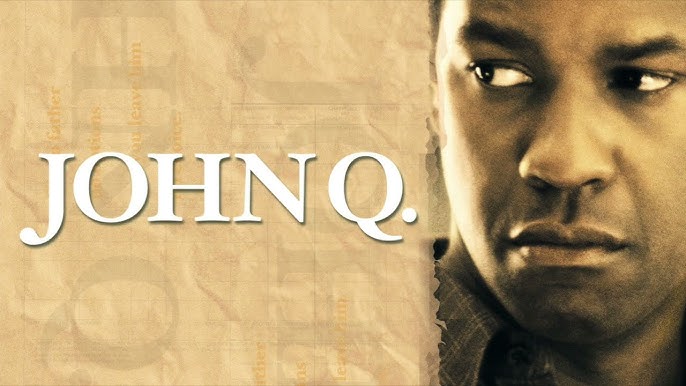
John Q., (released in theaters on Feb. 15, 2002), an emotionally charged and socially provocative drama, stars Denzel Washington as John Quincy Archibald, a hardworking factory worker struggling to make ends meet in a sluggish economy.
His world is shattered when his young son, Michael, collapses during a baseball game. At the hospital, John and his wife Denise (Kimberly Elise) receive devastating news: Michael has an enlarged heart and will die without an immediate transplant.
The situation turns from tragic to infuriating when they discover that their health insurance has been downgraded to a plan that won’t cover the $250,000 procedure.
Faced with the cold bureaucracy of hospital administrator Rebecca Payne (Anne Heche) and the clinical detachment of heart surgeon Dr. Raymond Turner (James Woods), John tries every legal avenue to raise the money, only to be met with shut doors.
Driven by a father’s primal instinct to save his child, John takes the hospital’s emergency room hostage.
Inside, he finds a diverse group of patients and staff, including a young man played by Kevin Connolly and a streetwise local played by Eddie Griffin.
Outside, the standoff becomes a media circus, putting John in the crosshairs of veteran hostage negotiator Frank Grimes (Robert Duvall) and the ambitious, hard-line Police Chief Gus Monroe (Ray Liotta).
The plot builds to a heart-wrenching climax where John must decide if he is willing to make the ultimate sacrifice to ensure his son has a future.
Laura Harring and Paul Johansson round out the cast.

Denzel Washington in John Q. (Photo/New Line Cinema)
Reception for John Q.
John Q. grossed $23.6 million on its opening weekend, finishing No. 1 at the box office.
The film would gross $102.2 million worldwide.
Legacy
The legacy of John Q. is defined by its enduring relevance as a populist critique of the American healthcare system.
The film tapped into a deep-seated public anxiety regarding insurance companies and the high cost of life-saving medical care.
The movie was a significant box-office success, fueled by Washington’s powerhouse performance, which humanized a complex ethical dilemma.
It remains a staple of social-issue cinema, often cited in discussions about healthcare reform and the “right to life” versus the “bottom line.”
John Q.’s legacy is also felt in its influence on later “ordinary man pushed to the brink” thrillers, proving that a high-stakes premise is most effective when rooted in a relatable, systemic struggle.