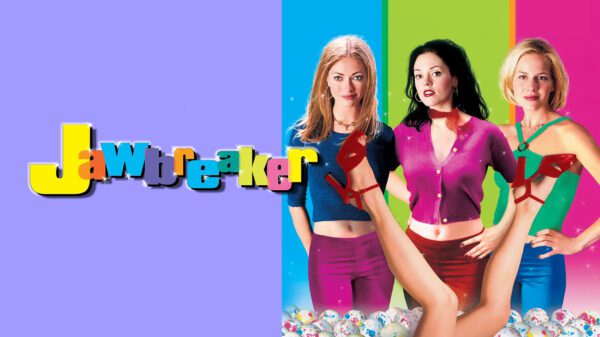





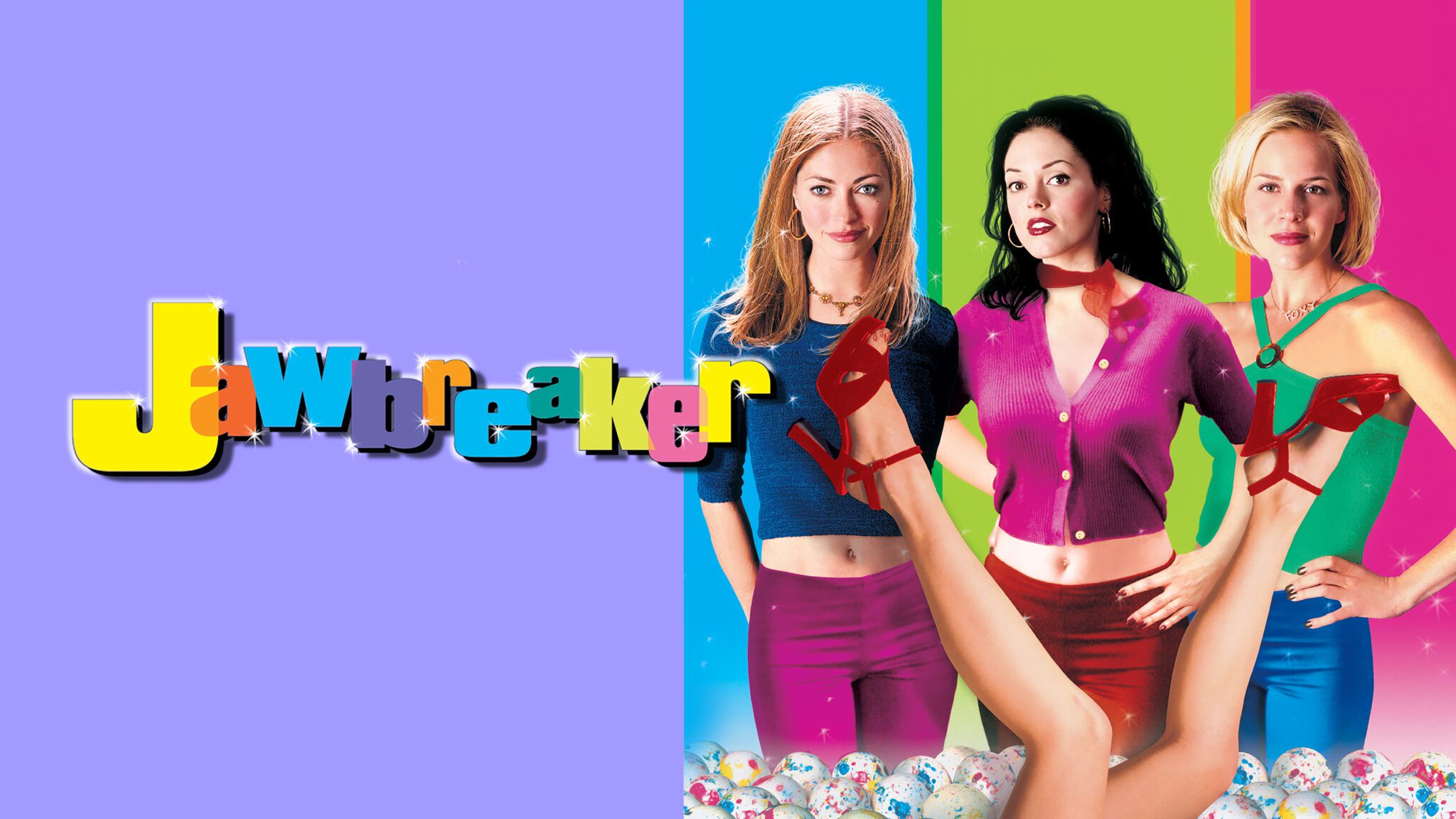
Jawbreaker (released in theaters on Feb. 19, 1999) is a neon-soaked, hyper-stylized nightmare that traded “sugar and spice” for cyanide and silk before the polished polish of modern teen dramas.
The story centers on the “Flawless Four,” the undisputed rulers of Reagan High.
Led by the sociopathic Courtney Alice Shayne (Rose McGowan), the clique includes the sweet-natured Julie (Rebecca Gayheart) and the shallow Marcie (Julie Benz).
As a birthday prank for their fourth member, Liz Purr (Charlotte Ayanna), the girls kidnap her by stuffing a giant jawbreaker into her mouth and locking her in a trunk.
The prank turns fatal when Liz chokes on the candy, leaving the girls with a corpse and a massive threat to their social standing.
While Julie is consumed by guilt, Courtney views the death as a PR hurdle.
When the school’s invisible outcast, Fern Mayo (Judy Greer), witnesses the girls disposing of the body, Courtney doesn’t kill her—she transforms her. Fern is rebranded as the stunning “Vylette,” buying her silence with popularity.
The plot spirals into a psychological power struggle as Julie teams up with a local boy, Zack (Chad Christ), and crosses paths with Detective Vera Cruz (Pam Grier) to expose Courtney’s tyranny.
The film reaches a fever pitch at the prom, where the social mask finally cracks in front of the entire student body, including faculty like Ms. Sherwood (Carol Kane).
Directed by Darren Stein, the film reimagined the high school hierarchy as a lethal monarchy, proving that being “fabulous” is often a full-time crime.
Marilyn Manson makes an appearance in a non-speaking cameo role as “The Stranger.”
William Katt, P.J. Soles and Jeff Conaway round out the cast.
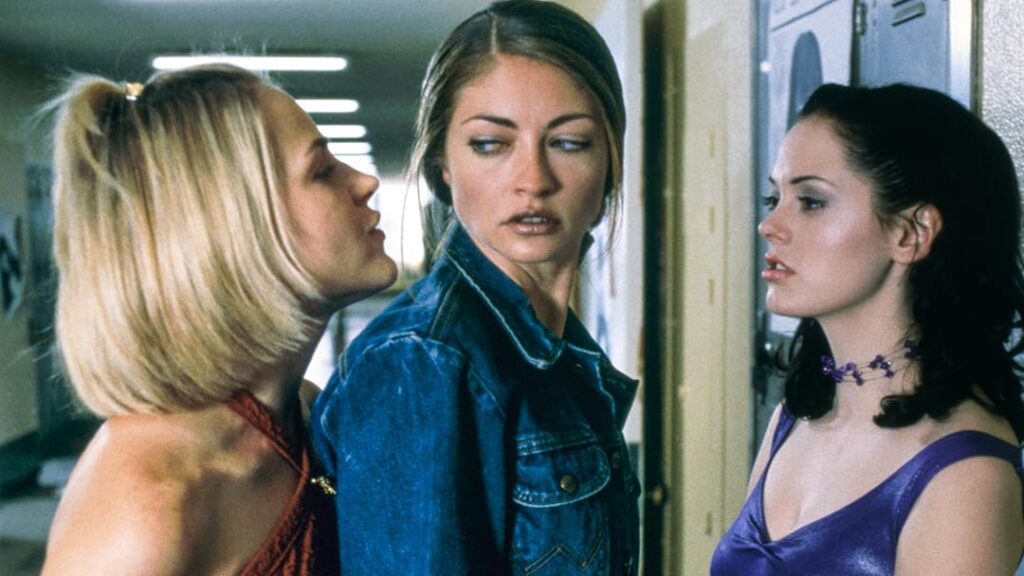
Jawbreaker (Photo/TriStar Pictures)
Reception for Jawbreaker
Jawbreaker grossed $1.6 million on its opening weekend, finishing 13th at the box office.
The film would gross $3.1 million in its theatrical run.
McGowan was nominated at the MTV Movie Awards for Best Villain, but lost to Matt Dillon for There’s Something About Mary.
Legacy
The legacy of Jawbreaker is etched in its unapologetic embrace of the “Mean Girl” archetype long before it became a mainstream trope.
It stands as a bridge between the dark satire of Heathers and the polished wit of the mid-2000s, carving out a niche for its distinct visual language—think saturated pastels, slow-motion hallways walks, and a soundtrack that feels like a fever dream.
Rather than offering a moralizing lecture, the film’s lasting impact comes from its cynical observation that power, once tasted, is harder to quit than any drug.
Jawbreaker transformed McGowan into a quintessential cult cinema villain and gave a generation of outcasts a vivid, if terrifying, look at the heights and depths of social ambition and it remains a cornerstone of the “teen noir” genre, celebrated for its campy dialogue and its refusal to play nice.