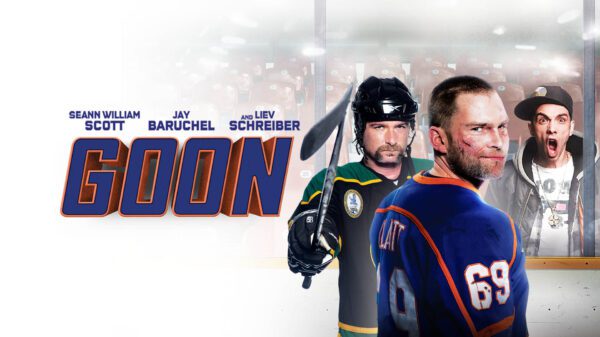

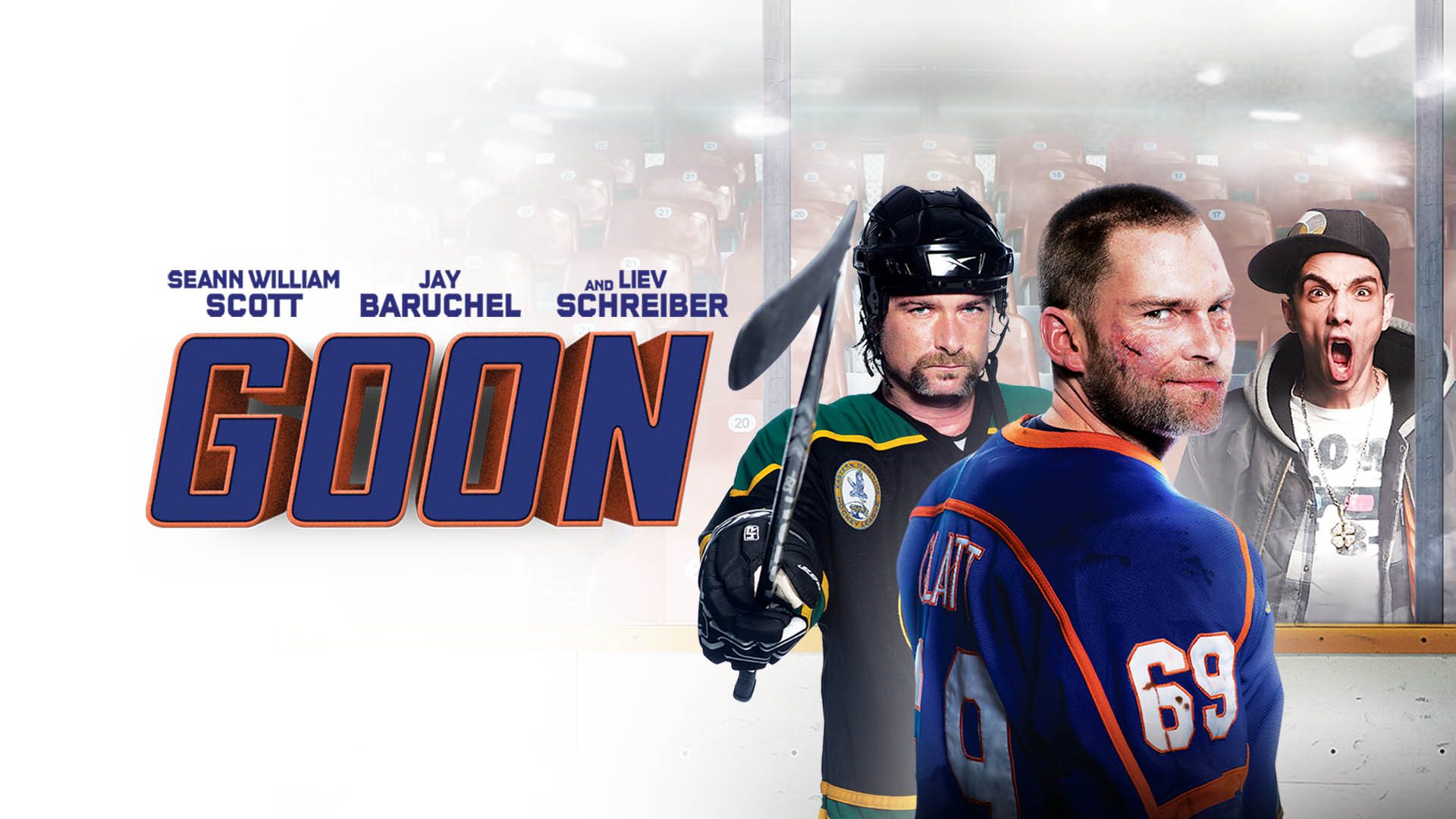
Goon (released in theaters on Feb. 24, 2012) is a bloody, foul-mouthed, and unexpectedly tender love letter to the “enforcer” era of professional hockey. While many sports films focus on the glory of the goal-scorer, this movie finds its soul in the grit of the man whose only job is to bleed for his teammates.
It manages to balance visceral, bone-crunching violence with a sweet-natured heart, anchored by a performance that redefined the career of its leading man.
The story follows Doug Glatt (Seann William Scott), a dim-witted but incredibly kind-hearted bouncer who feels like an outsider in his high-achieving family, particularly compared to his father (Eugene Levy).
After defending his best friend, Pat (Jay Baruchel), from a heckler at a minor league hockey game, Doug is recruited by a local team for one specific skill: his ability to take and deliver a punch.
Despite his inability to skate, Doug is eventually called up to the Halifax Highlanders to protect their struggling star prospect, Xavier Laflamme (Marc-André Grondin).
Coached by the intense Ronnie Hortense (Kim Coates), Doug becomes a cult hero, earning the nickname “The Thug.”
As he navigates a tentative romance with Eva (Alison Pill), a hockey fan who appreciates his gentleness, he finds himself on a collision course with his idol, the legendary and aging enforcer Ross “The Boss” Rhea (Liev Schreiber).
The film builds to a brutal, inevitable showdown between the two titans—a final battle that serves as a passing of the torch and a meditation on the physical toll of a vanishing role in the sport.
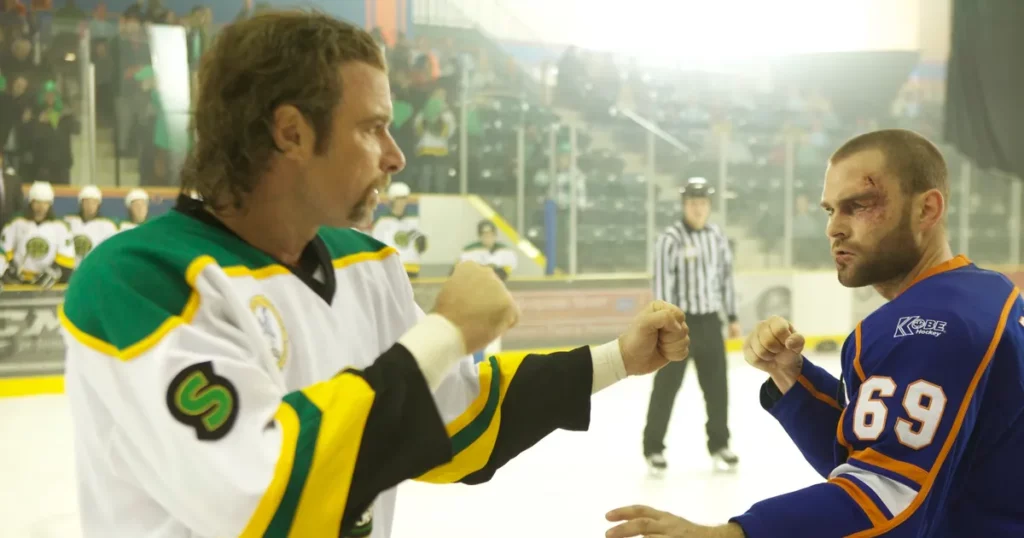
Liev Schreiber and Seann William Scott in Goon (Photo/Magnet Releasing)
Reception for Goon
Goon grossed $1.2 million on its opening weekend, finishing 16th at the box office in limited release and would $7 million in its theatrical run.
The film’s success ultimately resulted in the sequel, Goon: Last of the Enforcers, which was released in 2017.
Roger Ebert gave Goon three out of four stars in his review.
Legacy
The legacy of Goon lies in its reputation as arguably the greatest hockey movie since Slap Shot. It eschews the glossy “underdog” tropes of Disney-era sports films in favor of a raw, blue-collar authenticity that resonated deeply with actual players and fans of the sport.
It famously showcased a new side of Scott, proving he could embody a character of profound stillness and empathy beneath a layer of scar tissue.
Beyond its cult status, the film sparked conversations about the ethics and the fading necessity of fighting in hockey, treated with a reverence for the men who performed the task.