


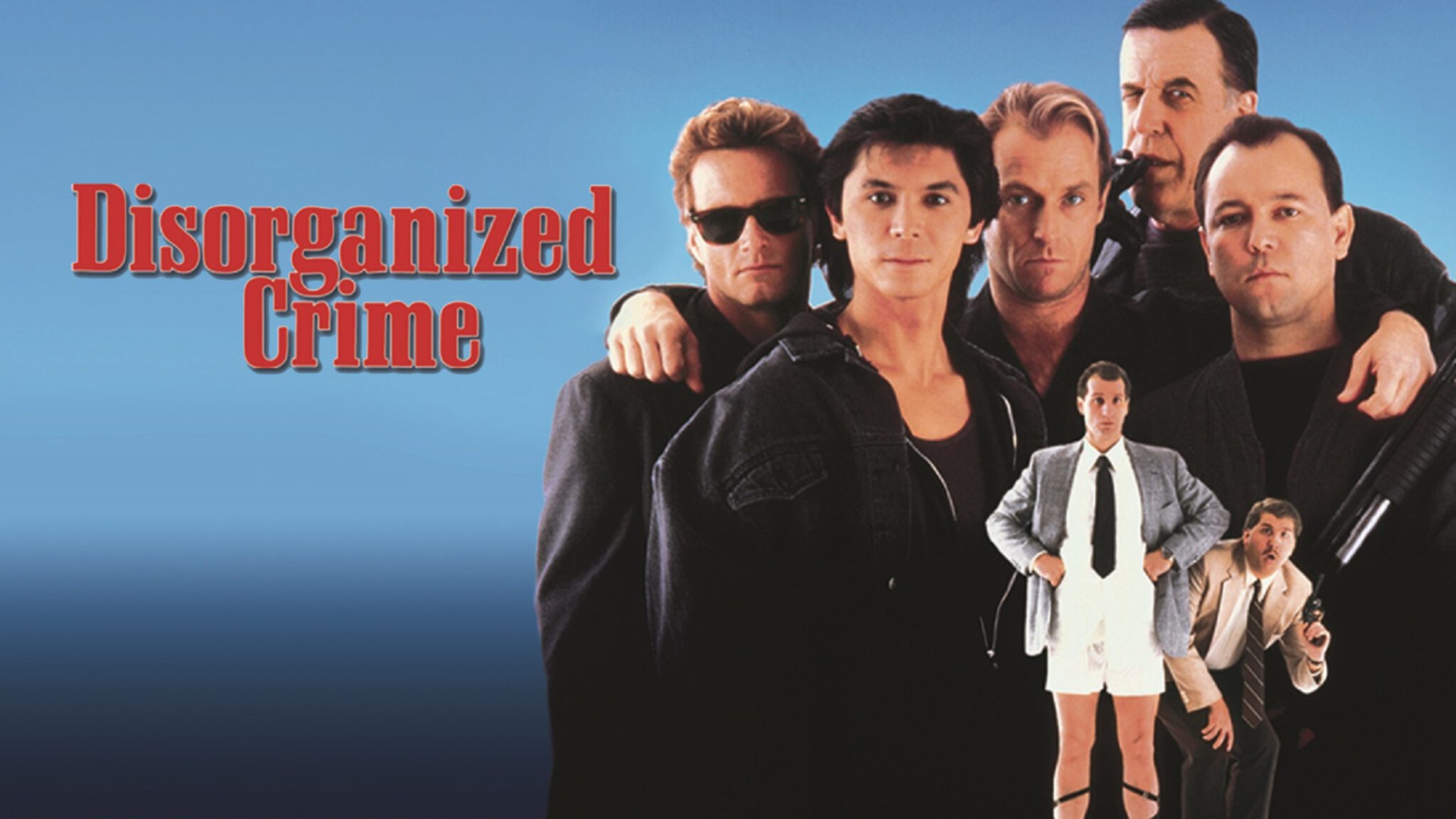
Disorganized Crime (released in theaters on April 14, 1989), from writer-director Jim Kouf, is a clever heist comedy that trades the slick professionalism of Ocean’s Eleven for a more chaotic, character-driven approach. Nestled in the scenic, rugged landscapes of Montana, the film is a masterclass in ensemble chemistry, proving that even the best-laid plans are no match for the unpredictable friction of four idiosyncratic criminals forced to work together.
The story begins when Frank Salazar (Corbin Bernsen), a meticulous criminal mastermind, scouts a small-town bank in Montana and recruits four specialists from across the country to help him rob it.
The crew consists of Max (Fred Gwynne), a veteran explosives expert; Ray (Rubén Blades), a street-smart local thief; Nick (William Russ), a high-strung getaway driver; and Jose (Lou Diamond Phillips), a young car thief and explosives wizard.
However, before the team can meet their leader, Frank is apprehended by a pair of relentless New Jersey detectives, George Denver (Ed O’Neill) and Bill Birch (Daniel Roebuck), who have tracked him across state lines.
Left stranded at a remote cabin without their boss or the specific details of the plan, the four specialists are forced to interact.
Tensions flare as their vastly different personalities clash—Max’s old-school stoicism grates against Nick’s paranoia, while Ray and Jose try to keep the group from imploding.
As they dodge the local law enforcement, including a sheriff played by Hoyt Axton, the “disorganized” quartet decides to proceed with the heist anyway.
The film builds to a frantic, comedy-of-errors climax as the criminals try to outmaneuver the detectives and the town’s security, realizing that their only hope for success is to actually start trusting one another.
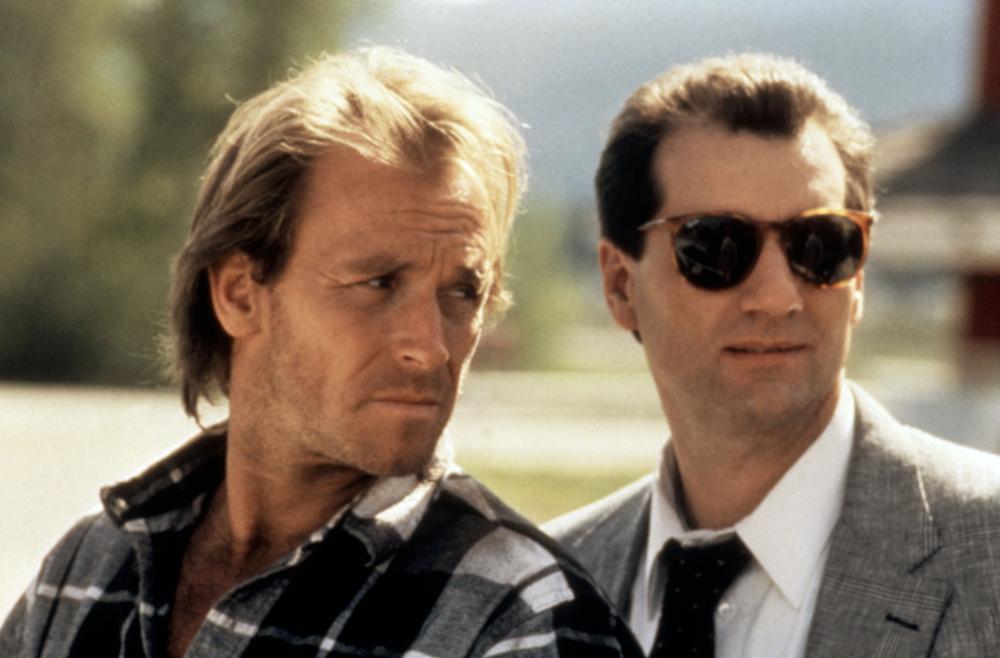
Corbin Bernsen and Ed O’Neill in Disprganized Crime (Photo/Touchstone Pictures)
Reception for Disorganized Crime
Disorganized Crime grossed $2.8 million on its opening weekend, finishing sixth at the box office. The No. 1 film of the week was Major League, which earned $7.7 million on its second weekend.
Disorganized Crime would gross $7.7 million in its theatrical run.
Legacy
Disorganized Crime is rooted in its status as a quintessential “actor’s movie.”
While many heist films focus on the mechanics of the robbery, this film prioritizes the hilarious, often poignant dialogue between its four leads.
It is fondly remembered as one of the final great performances by Gwynne, who brought a weary, deadpan dignity to the role of Max that contrasted perfectly with the high energy of Phillips and Blades.
The film has maintained a dedicated cult following because it captures a specific brand of 1980s blue-collar comedy that feels both grounded and absurd.
It also showcased the comedic range of O’Neill during the height of his Married… with Children fame, allowing him to play a more competent, yet equally frustrated, character.
By blending the tension of a thriller with the heart of a buddy comedy, Disorganized Crime remains a refreshing alternative to more serious crime dramas, standing as a testament to the idea that the most interesting part of a crime isn’t the money, but the eccentric people trying to steal it.