
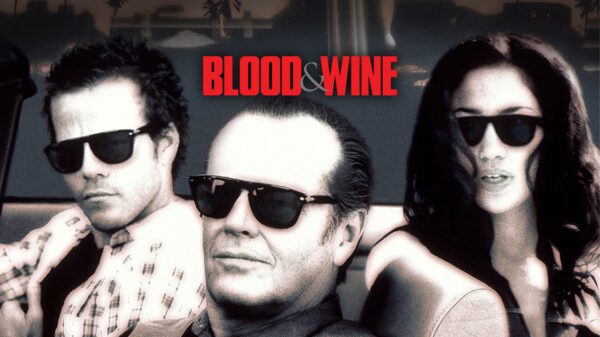





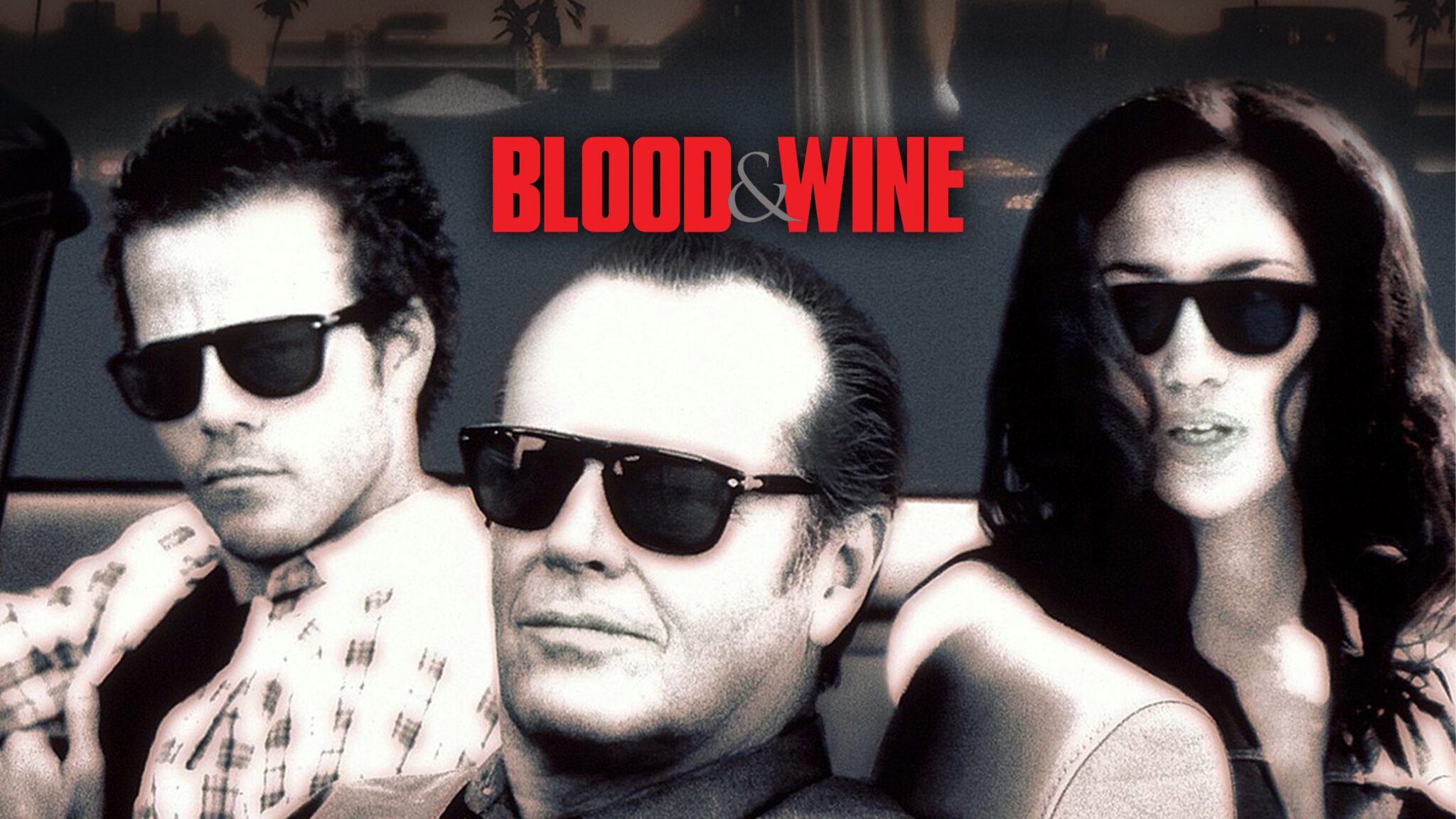
Blood and Wine (released in theaters on Feb. 21, 1997) serves as a jagged, sun-drenched reunion between director Bob Rafelson and the legendary Jack Nicholson, marking their final collaboration in a partnership that defined the New Hollywood era. Far from the polished capers of the mid-90s, this is a sweat-soaked, cynical neo-noir that trades “movie magic” for the brutal reality of desperate people making terrible decisions in the heat of Miami.
The film follows Alex Gates (Nicholson), a high-end wine merchant whose business is crumbling under the weight of debt and a failing marriage to the bitter Suzanne (Judy Davis).
Alex hatches a plan to steal a million-dollar diamond necklace from one of his wealthy clients.
To pull it off, he enlists the help of Victor Spansky (Michael Caine), a wheezing, foul-mouthed safecracker who is literally dying of emphysema but remains as lethal as a snake.
The heist is successful, but the getaway is a disaster. Alex’s estranged stepson, Jason (Stephen Dorff), accidentally becomes entangled in the aftermath, fleeing with the jewels alongside Alex’s mistress and accomplice, Gabriela (Jennifer Lopez).
As Alex and the increasingly unstable Victor hunt them down, the narrative shifts from a traditional heist film into a claustrophobic family tragedy.
The tension is heightened by the presence of a menacing enforcer (Mike Starr) and the shifting loyalties of Gabriela, who finds herself caught between a man she once loved and a younger man who offers a glimpse of genuine escape.
The film culminates in a bleak, percussive finale where the diamonds—once symbols of salvation—become a weight dragging everyone toward an inevitable, violent bottom.
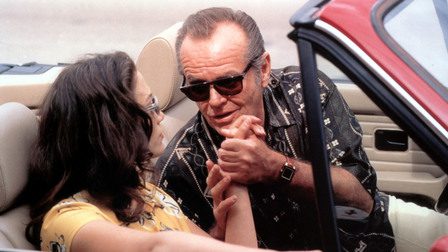
Jennifer Lopez and Jack Nicholson in Blood and Wine (Photo/Fox Searchlight Pictures)
Reception of Blood and Wine
Blood and Wine grossed $420,993 on its opening weekend, in limited release.
The film would gross $1.1 million in its theatrical run.
Roger Ebert gave Blood and Wine three and a half out of four stars in his review.
Legacy
Blood and Wine‘s legacy is often overshadowed by its more commercial contemporaries, yet it remains a crucial text for fans of the “hard-boiled” genre. It stands as a spiritual successor to Rafelson and Nicholson’s Five Easy Pieces (1970) and The King of Marvin Gardens (1972).
The film is perhaps most significant for showcasing a pre-superstardom Lopez in a performance that hinted at her dramatic range.
While it lacks the “cool” factor of Tarantino-era noir, its legacy lies in its refusal to offer redemption.
Blood and Wine is a masterclass in atmospheric tension, reminding audiences that in the world of true noir, there are no heroes—only survivors and those who didn’t run fast enough.