


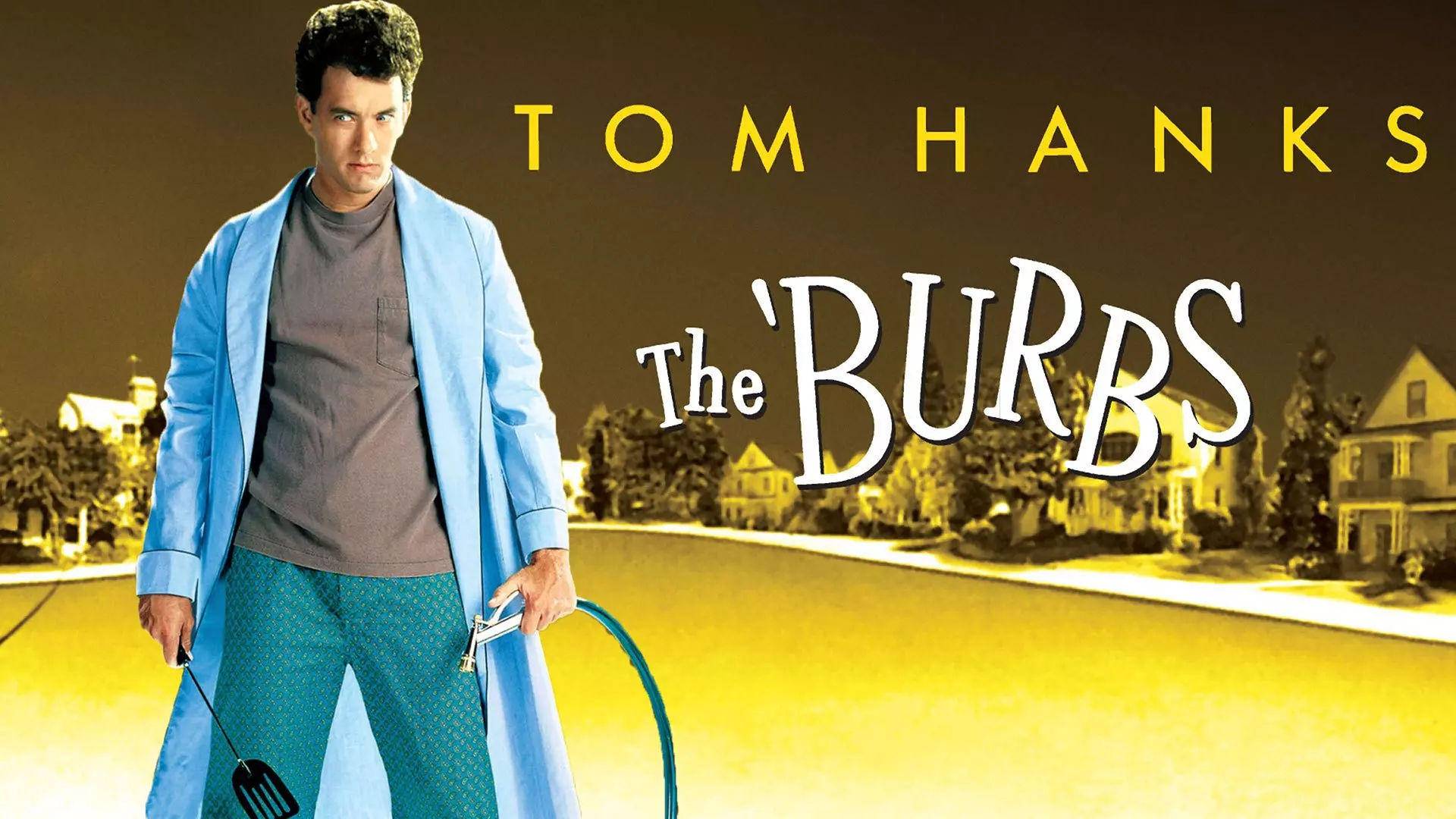
The ‘Burbs (released in theaters on Feb. 17, 1989), centers on Ray Peterson (Tom Hanks), a stressed-out suburbanite who decides to spend his week-long vacation relaxing at home in his quiet cul-de-sac. However, his peace is immediately shattered by the mysterious behavior of his new neighbors, the Klopeks.
Along with his hyperactive, conspiracy-theorist friend Art Weingartner (Rick Ducommun) and the militant, Vietnam-obsessed Mark Rumsfield (Bruce Dern), Ray becomes increasingly convinced that the Klopeks are murderous occultists who spend their nights digging in their backyard and operating loud, bone-crunching machinery in their basement.
The plot spirals into a frenzy of voyeurism and neighborhood surveillance as the trio monitors every move of the elusive Dr. Werner Klopek (Henry Gibson) and his strange family.
Ray’s level-headed wife, Bonnie (Carrie Fisher), and Rumsfield’s glamorous wife, Amber (Wendy Schaal), try to maintain a sense of normalcy, but their efforts are thwarted by the escalating antics of the men and the local teenager, Ricky Butler (Corey Feldman), who watches the chaos unfold like a spectator sport.
The tension reaches a boiling point when a local elderly resident, Walter Seznick (Gale Gordon), goes missing, prompting the amateur detectives to break into the Klopek residence while the family is away.
Directed by Joe Dante, the film masterfully blends slapstick humor with elements of Gothic horror, culminating in a literal and metaphorical explosion that answers the ultimate question: are the neighbors monsters, or are the “normal” people the ones who have truly lost their minds?
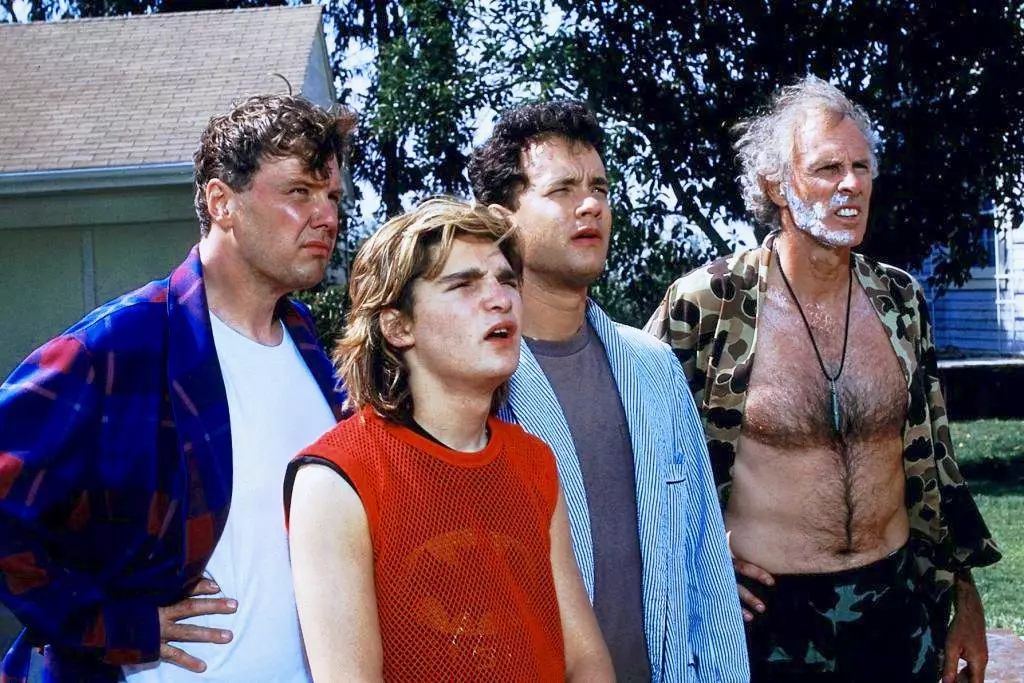
The ‘Burbs (Photo/Universal Pictures)
Reception for The ‘Burbs
The ‘Burbs grossed $11.1 million on its opening weekend, finishing No. 1 at the box office.
The film would gross $49.1 million worldwide.
Roger Ebert gave The ‘Burbs two out of four stars in his review.
Legacy
The legacy of The ‘Burbs is the definitive satire of American suburban paranoia and it captured a unique moment in Hanks’ career as he transitioned from high-energy comedy to the more nuanced performances that would define his later work.
The film is celebrated for Dante’s signature directorial style, which infuses the mundane setting of Mayfield Place with a sense of cartoonish dread and cinematic homages to classic horror.
It has developed a massive cult following thanks to its quotable script, the frantic comedic chemistry between Hanks and Ducommun, and Dern’s legendary performance as the ultra-intense Rumsfield.
Beyond the laughs, the film remains a prescient commentary on “not in my backyard” mentalities and the suspicion of the “other,” proving that the most terrifying things are often not what is hidden in the basement, but what we project onto our neighbors.