




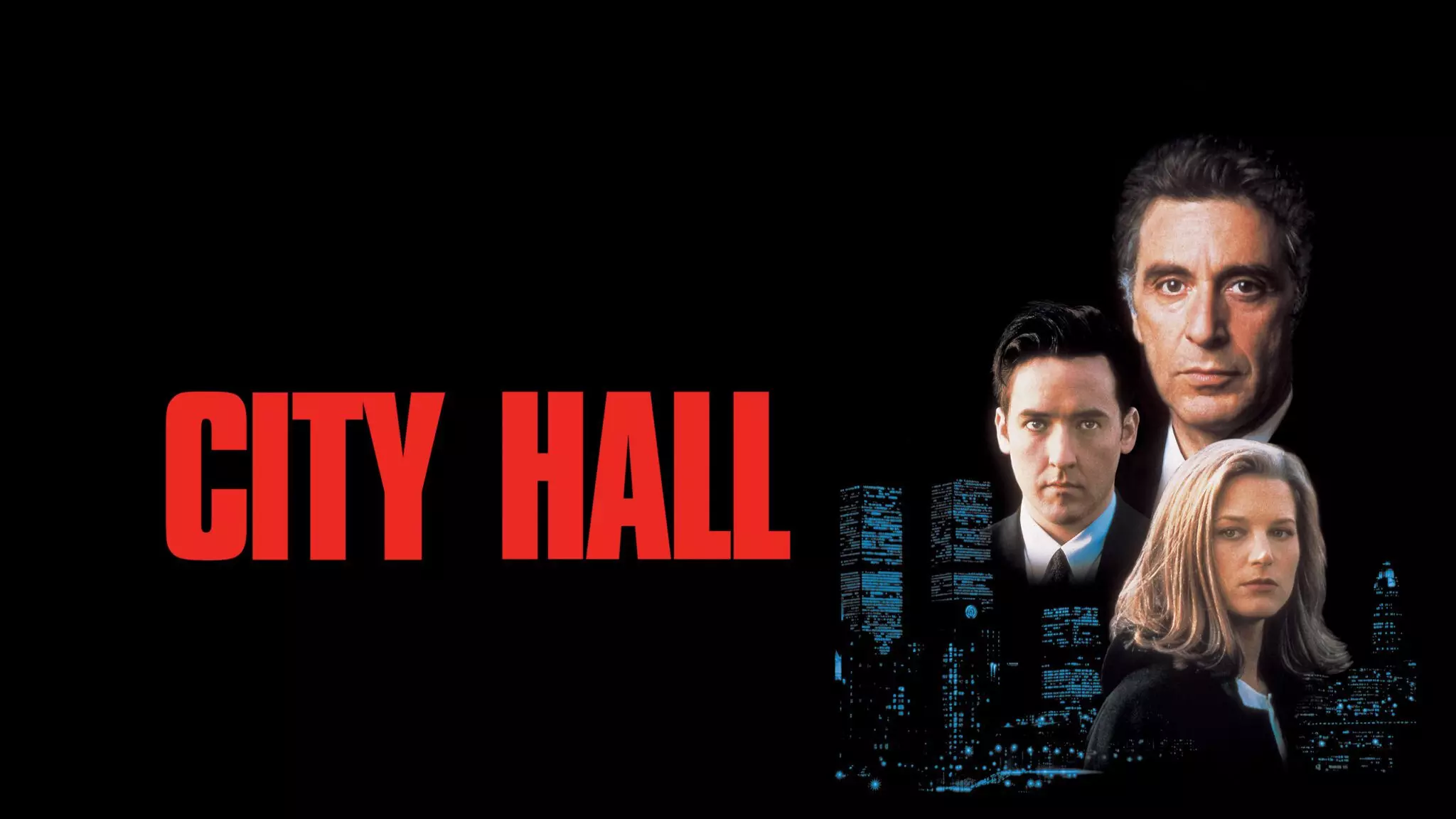
City Hall (released on Feb. 16, 1996), provides an insider’s look at the bustling machinery of New York City government when it is thrown into chaos following a tragic shootout.
The plot begins on a rainy street corner where an undercover detective and a mobster’s nephew kill each other, but a stray bullet also claims the life of an innocent six-year-old boy.
Deputy Mayor Kevin Calhoun (John Cusack), a young, idealistic Southerner who idolizes his boss, Mayor John Pappas (Al Pacino), is tasked with managing the fallout.
Pappas is a charismatic, visionary leader with aspirations for the White House, but the investigation into the shooting begins to reveal uncomfortable connections between the police, the judiciary, and the criminal underworld.
As Calhoun digs deeper, he crosses paths with Marybeth Cogan (Bridget Fonda), a legal aid attorney representing the family of the slain detective.
Their search for the truth leads them to Frank Anselmo (Danny Aiello), a powerful Brooklyn politician with deep ties to organized crime, and Judge Walter Stern (Martin Landau), a respected figure whose integrity is suddenly called into question.
Directed by Harold Becker and co-written by Ken Lipper and Nicholas Pileggi, the film evolves from a procedural into a deep character study of political survival.
Calhoun is eventually forced to confront the heartbreaking possibility that the man he considers a father figure – Mayor Pappas – may have traded a piece of the city’s soul for the sake of political stability.
David Paymer, Anthony Franciosa, Richard Schiff, John Finn, John Slattery, and Nestor Serrano round out the cast.
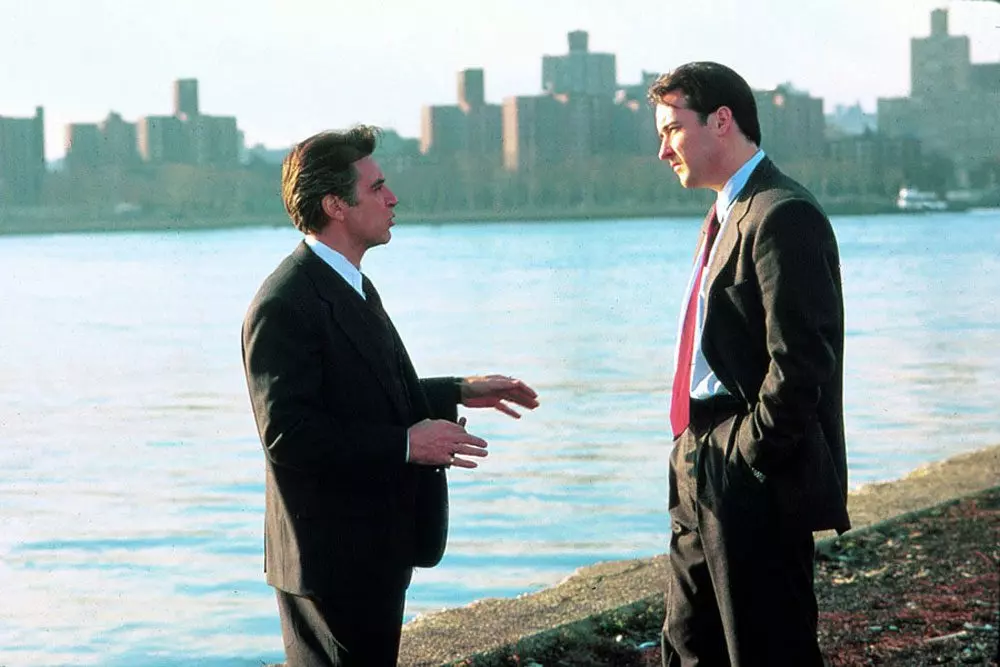
Al Pacino and John Cusack in City Hall (Photo/Sony Pictures)
Reception for City Hall
City Hall grossed $8 million on its opening weekend, finishing fourth at the box office behind Broken Arrow ($13.5 million), Muppet Treasure Island ($10.113 million), and Happy Gilmore ($10.112 million).
The film would gross 33.4 million in its theatrical run.
Roger Ebert gave City Hall two-and-a-half out of four stars in his review.
Legacy
The legacy of City Hall lies in its sophisticated exploration of the “gray areas” of urban governance. It arrived at a time when the American public was increasingly fascinated by the inner workings of power, yet the film stood out for its refusal to provide easy answers or clear-cut villains.
The film is most remembered for Pacino’s powerhouse performance, particularly his soaring, Shakespearean funeral oration for the young victim, which remains one of the most celebrated monologues of his career.
The film served as a pivotal moment for Cusack, proving he could hold his own against a heavyweight like Pacino in a mature, dramatic role.
While it was a modest success at the box office, it has earned a lasting reputation as a thoughtful, “literary” thriller that accurately captured the atmosphere of New York City politics.
City Hall continues to be praised for its sharp dialogue and its sobering message that in the world of high-stakes politics, the pursuit of the greater good often requires a devastating personal cost.