
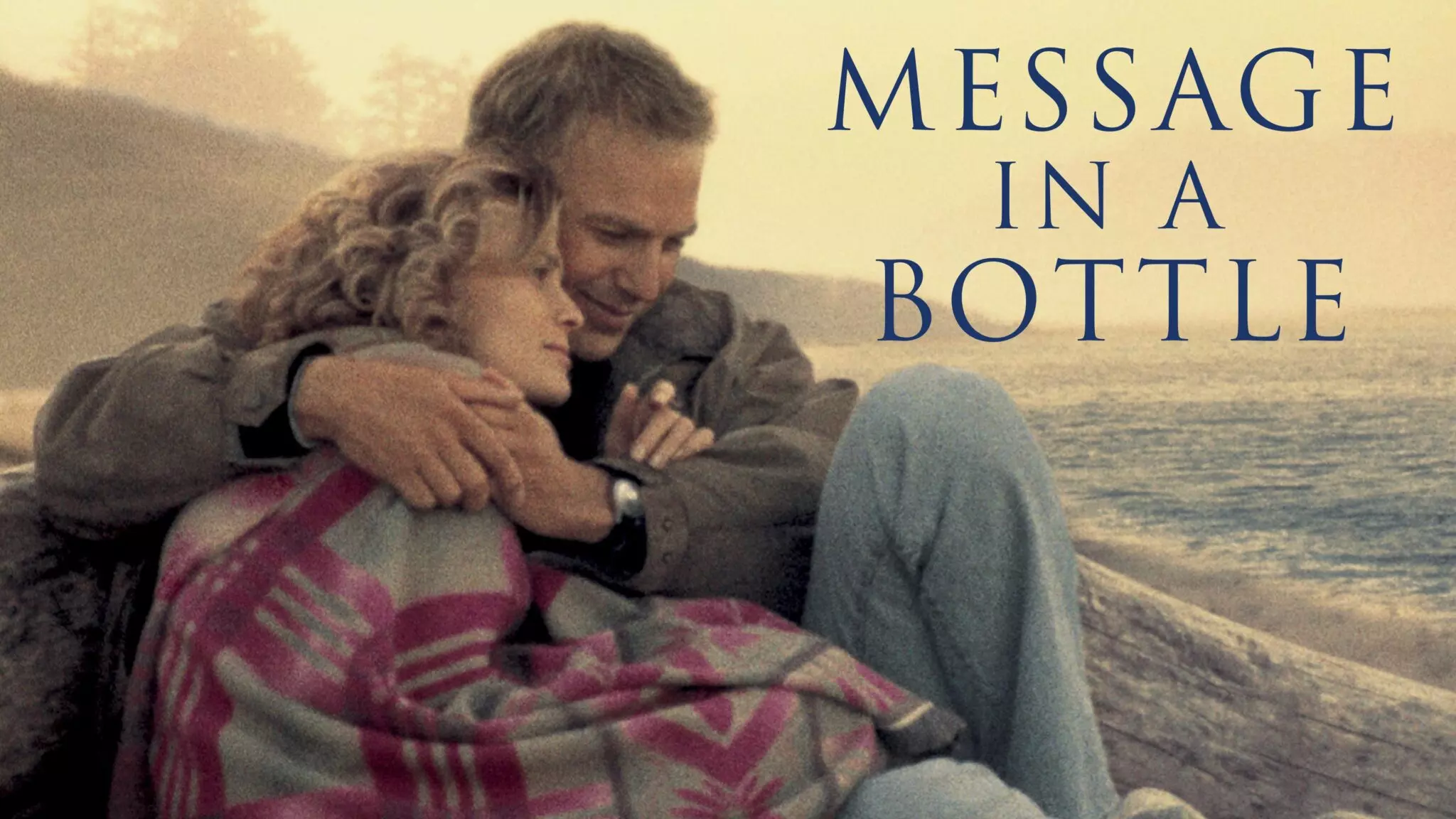
In Message in a Bottle (released in theaters on Feb. 12, 1999), Theresa Osborne (Robin Wright), a lonely Chicago Tribune researcher, discovers a weathered bottle on a Cape Cod beach. Inside is a heartbreakingly poetic letter addressed to “Catherine” from a man signed only as “G.”
The letter’s raw emotion and timeless devotion captivate Theresa, leading her to track down its author.
Her investigation brings her to the rugged, windswept coast of North Carolina, where she meets Garret Blake (Kevin Costner), a stoic shipbuilder who has been living in a state of suspended animation since the death of his wife, Catherine.
The plot unfolds as Theresa hides her true intentions, allowing a tentative and tender romance to bloom between her and the grieving Garret.
As they bond over the restoration of a sailboat, Theresa finds herself falling for the man behind the letters, while Garret struggles to let go of the past.
Adding depth to the emotional landscape is Garret’s father, Dodge (Paul Newman), a gruff but wise man who pushes his son to rejoin the living.
However, the secret of the letters looms over their relationship, and when Garret finally discovers Theresa’s initial deception, the fragile trust they’ve built is shattered.
The narrative, based on the novel by Nicholas Sparks, builds toward a tragic and life-altering climax during a storm at sea, forcing the characters to confront the reality that love often requires the courage to say goodbye.
John Savage, Illeana Douglas, Jesse James, Raphael Sbarge and Robbie Coltrane round out the cast.
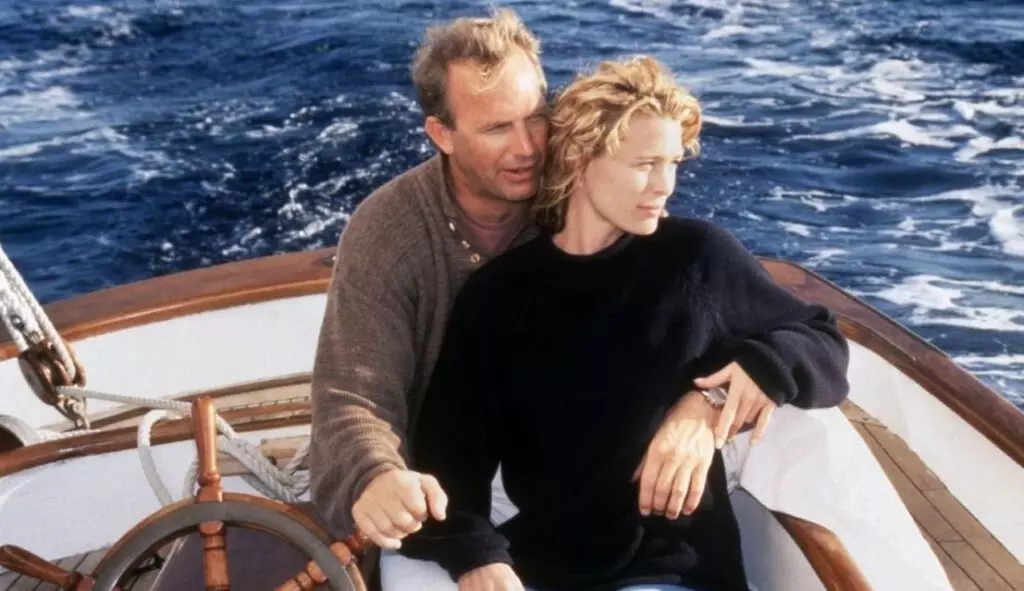
Kevin Costner and Robin Wright in Message in a Bottle (Photo/Warner Bros.)
Reception for Message in a Bottle
Message in a Bottle grossed $18.9 million on its opening weekend, finishing No. 1 at the box office.
The film would gross $118.9 million worldwide.
Legacy
Message in a Bottle‘s legacy is its role in solidifying the “Nicholas Sparks” subgenre of cinema – high-emotion, picturesque dramas that find beauty in tragedy.
The film was the first major adaptation of Sparks’ work, setting the tonal blueprint for future hits like The Notebook and is remembered for its atmospheric cinematography and the legendary presence of Newman, whose performance provided a grounded, gritty soul to the movie’s more sentimental moments.
It served as a significant box-office hit that reaffirmed Costner’s status as a romantic lead and showcased Wright’s ability to carry a major studio drama with quiet, luminous strength.
Over the years, it has become a staple of romantic cinema, frequently cited for its ability to tug at the heartstrings while celebrating the enduring power of the written word.
Message in a Bottle remains a definitive example of the “adult romance,” a film that treats the complexities of grief and second chances with a lush, cinematic reverence that continues to resonate with audiences seeking a good, cathartic cry.