









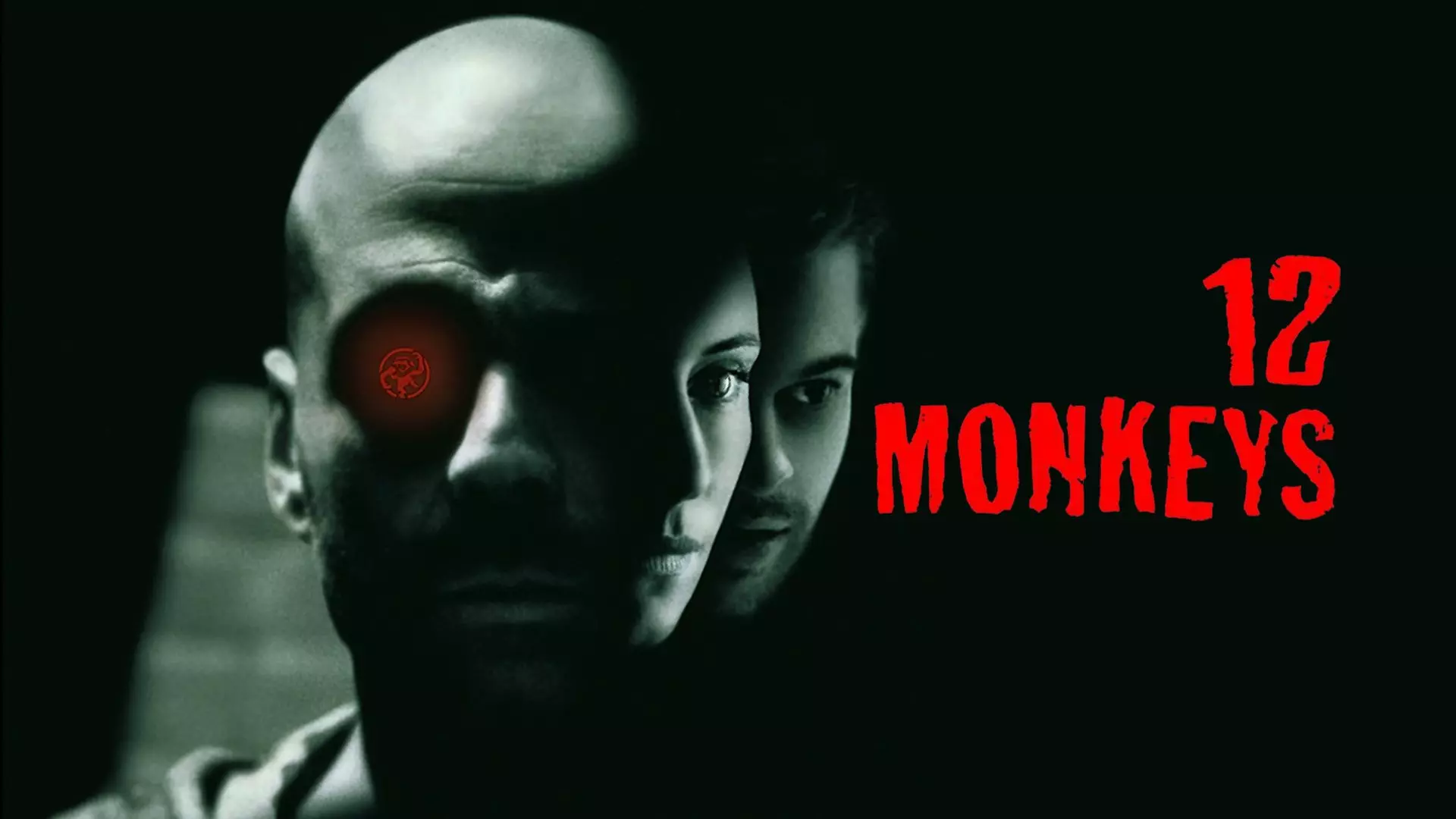
12 Monkeys (released in theaters on Dec. 29, 1995) is a haunting and visually spectacular foray into the nature of memory, fate, and the fragility of human civilization. Directed by the visionary Terry Gilliam and inspired by Chris Marker’s short film La Jetée, this neo-noir science fiction epic stands as one of the most intellectually stimulating films of the 1990s.
Gilliam utilizes his signature “steampunk-meets-decay” aesthetic to create a future that feels uncomfortably tangible, grounding high-concept time travel in a world of grime, madness, and tragic inevitability.
In the year 2035, the remnants of humanity live underground after a lethal virus wiped out five billion people in 1996.
James Cole (Bruce Willis), a haunted prisoner, is “volunteered” by a panel of scientists to travel back in time to gather information about the original strain of the virus, believed to have been released by a shadowy group known as the Army of the Twelve Monkeys.
However, the technology is imperfect; Cole is accidentally sent to 1990, where he is promptly institutionalized.
There, he meets Dr. Kathryn Railly (Madeleine Stowe), a psychiatrist who becomes fascinated by his seemingly delusional warnings, and Jeffrey Goines (Brad Pitt), the fanatical, hyperactive son of a world-renowned virologist (Christopher Plummer).
As Cole is yanked back and forth through time—at one point landing in the trenches of WWI—he begins to lose his grip on what is real and what is a “present-day” delusion. Eventually arriving in the correct year of 1996, he reunites with a now-convinced Railly.
They track the movements of the Army of the Twelve Monkeys while being pursued by authorities, including determined detective Lt. Halperin, played by Christopher Meloni.
As Cole encounters his own past memories and characters like the mysterious Dr. Peters (David Morse), he realizes that his efforts to change the future might be the very thing that triggers it.
The narrative builds to a devastating climax at a Philadelphia airport, where the circular nature of time reveals that some destinies are written in stone.
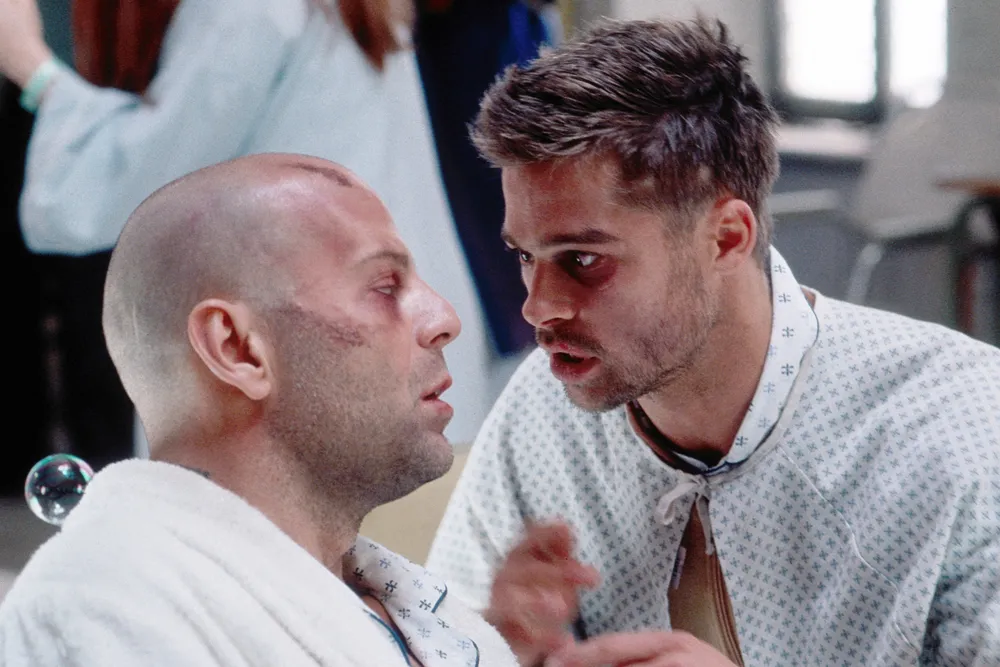
Bruce Willis and Brad Pitt in 12 Monkeys (Photo/Universal Pictures)
Reception for 12 Monkeys
12 Monkeys grossed $13.8 million on its opening weekend, finishing No. 1 at the box office.
The film would gross $168.8 million worldwide.
Roger Ebert gave 12 Monkeys three stars in his review.
Pitt won the Golden Globe Award for Best Supporting Actor in a Motion Picture.
The film’s success inspired a television series that aired on SYFY for four seasons from 2015-18.
Legacy
12 Monkeys’ legacy is its enduring reputation as a premier example of the “causal loop” time travel narrative, praised for its tight, logical consistency and emotional weight.
The film is remembered for Pitt’s manic, Oscar-nominated performance, which shattered his “pretty boy” image and established him as a major character actor.
Willis also earned significant acclaim for his vulnerable, understated turn, often cited as one of the finest dramatic roles of his career.
12 Monkeys is viewed today as a definitive work of dystopian fiction, recognized for its prescient themes regarding global pandemics and the subjective nature of sanity. It remains a visually arresting, intellectually demanding puzzle that rewards repeated viewings, standing as a testament to the power of a singular directorial vision.