




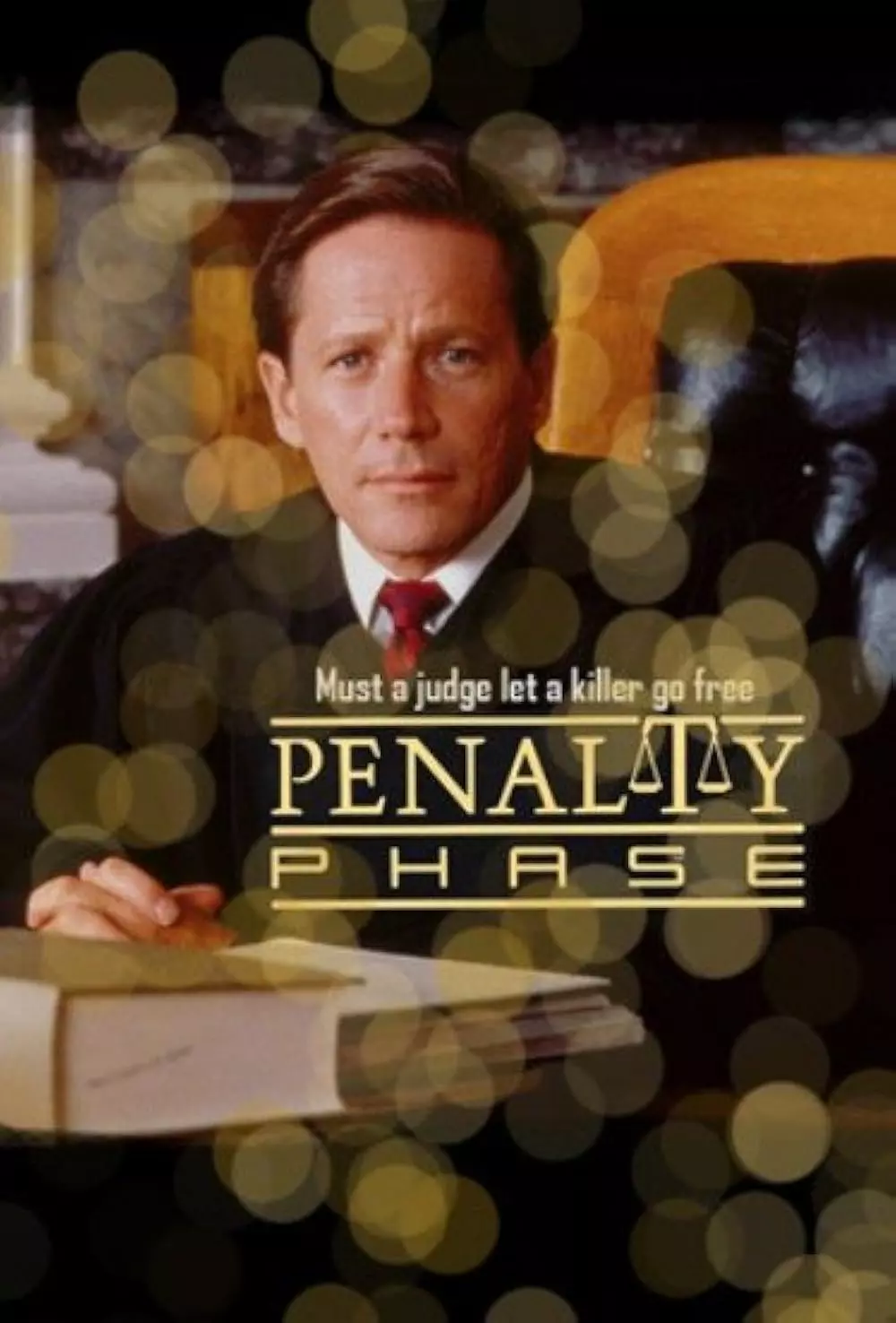
Penalty Phase, released on Nov. 18, 1986 as a prestigious CBS made-for-television event, stands as a sophisticated and morally complex legal drama that eschews courtroom theatrics for a deep dive into the psychological burden of the bench. Directed by Academy Award winner Tony Richardson, the film tackles the controversial intersection of constitutional law and public vengeance.
It is a taut, intellectually honest exploration of the “judicial conscience,” anchored by a powerful, understated performance from Peter Strauss, who embodies the lonely integrity required to uphold the law when the entire world is screaming for blood.
Judge Kenneth Hoffman (Strauss) is a highly respected jurist presiding over a grueling, high-profile murder case in a tight-knit community.
The defendant is a cold-blooded killer Nolan Esherman (Richard Chaves) whose guilt is not in question; however, during the “penalty phase” of the trial – where the jury must decide between life in prison or the death penalty – Hoffman discovers a catastrophic procedural error made by the police during the initial investigation.
This technicality, involving a breach of constitutional rights, legally mandates that certain key evidence be suppressed, which could potentially result in the killer walking free or receiving a significantly lighter sentence.
As Hoffman grapples with this discovery, he finds himself under immense pressure from both his professional peers and his personal circle.
He is supported by his loyal assistant (Melissa Gilbert) and must navigate the expectations of the seasoned Judge Faulkner (Mitchell Ryan).
Meanwhile, his personal life becomes a battlefield as he deals with Katie Pinter (Jane Badler) and Nancy Faulkner (Millie Perkins), both of whom reflect the public’s desperate desire for swift, uncompromising justice.
The tension is heightened by the presence of aggressive figures played by Richard Bright as Judge Von Karman and Art LaFleur as Pete Pavlovich, who view Hoffman’s adherence to the law as a betrayal of the victims.
The narrative becomes a claustrophobic study of a man trapped between his duty to the Constitution and his own revulsion toward the criminal, culminating in a decision that threatens to destroy his career and his safety.
Karen Austin and John Harkins round out the cast.
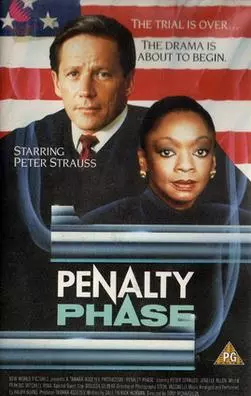
Peter Strauss in Penalty Phase (Photo/New World Television)
Legacy for Penalty Phase
Penalty Phase is remembered for its reputation as a high-water mark for the 1980s “social issue” television movie, a format that allowed for a level of nuance often missing from theatrical blockbusters.
It is known for Strauss’s disciplined performance, which earned him critical acclaim and solidified his status as the king of the prestige miniseries and TV movie era.
The film is celebrated for its courage in presenting a protagonist who chooses the “unpopular” right over the “easy” wrong, providing a rare and realistic look at the mechanics of the American justice system.
Today, it is viewed as a definitive example of the “Golden Age” of CBS made-for-TV dramas, praised for its tight script, its lack of easy sentimentality, and its haunting reminder that the law is only as strong as the people tasked with defending it.