



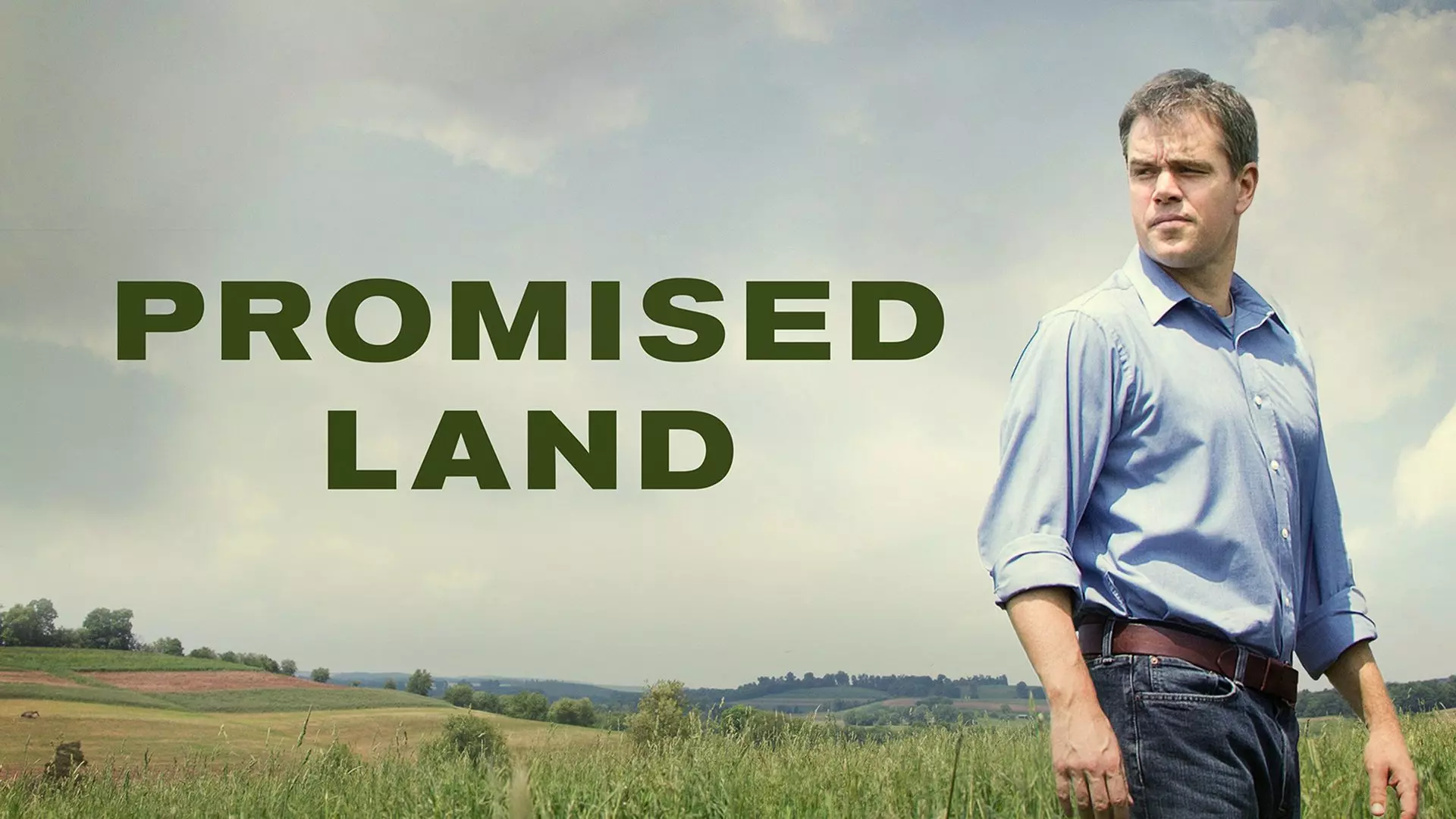
Promised Land (released in theaters on Jan. 4, 2012) marks a compelling reunion between director Gus Van Sant and Matt Damon, though it trades the youthful searching of Good Will Hunting for the weary complexities of modern corporate ethics. Co-written by Damon and John Krasinski, the film serves as a thoughtful, slow-burn drama that avoids easy moralizing, choosing instead to explore the murky intersection of environmentalism and economic desperation.
Steve Butler (Damon) is a rising star at massive energy company Global Crosspower Solutions, a man who grew up in a dying farming town and now spends his days convincing others that “fracking” is the only way to save their failing local economies.
Along with his sharp-witted partner, Sue Thomason (Frances McDormand), Steve arrives in an impoverished Pennsylvania town where he expects a quick and easy acquisition of drilling rights.
The mission hits an unexpected snag when a respected local science teacher, Frank Yates (Hal Holbrook), raises concerns about the long-term environmental impact during a town hall meeting.
The resistance gains momentum with the arrival of Dustin Noble (Krasinski), a charismatic environmental advocate who shares a heartbreaking story about his own family’s farm being ruined by the energy industry.
As Steve attempts to win over the townspeople, including a local teacher played by Rosemarie DeWitt, he finds his confidence shaken by Dustin’s savvy grassroots campaigning.
Surrounded by a cynical corporate structure, Steve is forced to confront the reality of the “promised land” he is selling and whether the cost of salvation is higher than the people can afford to pay.
Titus Welliver and Terry Kinney round out the cast.
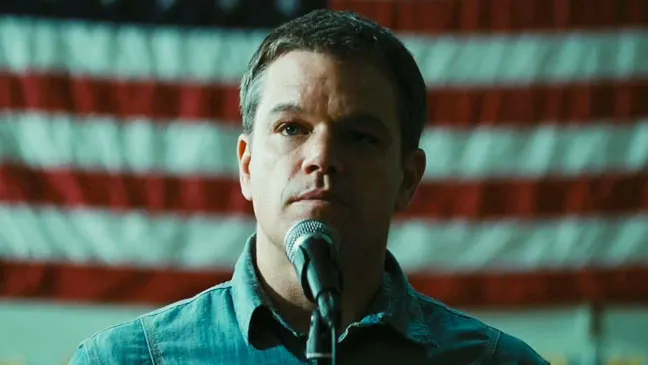
Matt Damon in Promised Land (Photo/Focus Features)
Reception for Promised Land
Promised Land grossed $4 million on its first weekend of wide release, finishing No. 10 at the box office.
The film would gross $11 million worldwide.
Legacy
The legacy of Promised Land lies in its nuanced approach to a highly polarized subject. Rather than portraying the corporate characters as mustache-twirling villains, the film highlights the genuine economic pain that makes their offers so tempting to rural communities.
It is remembered for its grounded, naturalistic performances, particularly Damon’s portrayal of a man caught between his professional identity and his rural roots, and McDormand’s effortlessly dry, realistic supporting turn.
The film’s legacy is also defined by its shocking third-act twist, which reframes the entire conflict as a commentary on the lengths corporations will go to control the narrative of public dissent.