
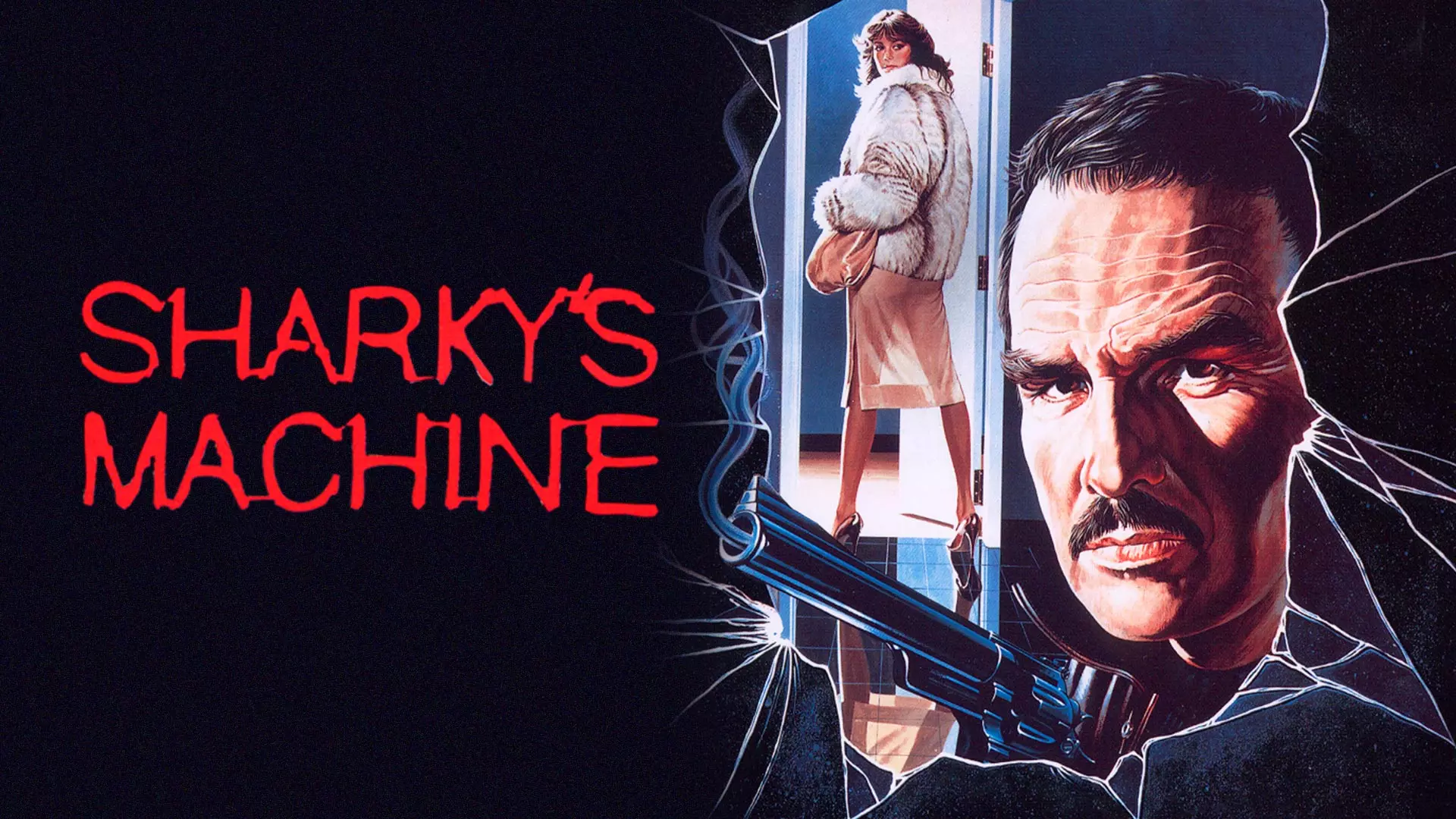
Sharky’s Machine (released in theaters on Dec. 18, 1981) saw Burt Reynolds stepped behind the camera to direct and star in a film that defied the “good ol’ boy” image he had cultivated in the late 70s. By blending the gritty atmosphere of a police procedural with the lush, romantic aesthetics of neo-noir, Reynolds created a sophisticated thriller that stands as one of the most underrated entries in the genre.
Tom Sharky (Reynolds) is a hard-edged narcotics cop who, after a high-stakes bust goes sideways, is demoted to the “vice” squad—a basement-dwelling unit of outcasts.
Undeterred, Sharky rallies his ragtag team of detectives, including veteran officers played by Brian Keith, Charles Durning, Bernie Casey, and Richard Libertini.
Together, they stumble upon a high-level conspiracy involving a prominent politician (Earl Holliman) who is running for governor of Georgia and a ruthless international crime syndicate.
The heart of the investigation centers on Dominoe (Rachel Ward), a high-class call girl who is inadvertently caught in the crosshairs of the powerful men she serves.
As Sharky conducts surveillance on her apartment, he finds himself falling in love with the woman he is supposed to be using as bait.
The tension escalates as the syndicate’s terrifying, drug-addicted assassin, Billy Score (Henry Silva), begins systematically hunting Sharky’s team.
Sharky must navigate a landscape of corruption and betrayal to save Dominoe and dismantle the “machine” that controls the city.
Vittorio Gassman, Darryl Hickman and Val Avery round out the supporting cast.
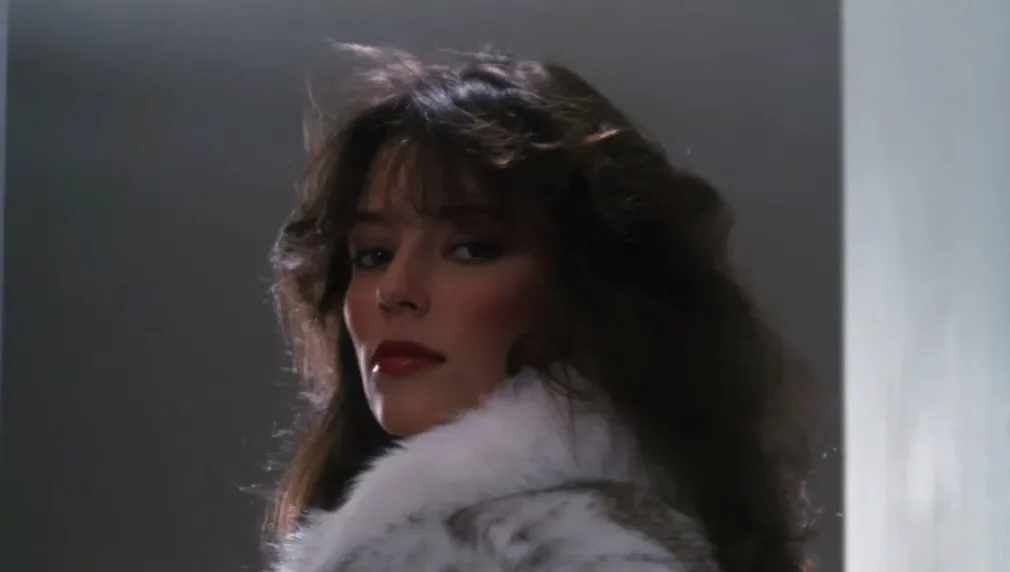
Rachel Ward in Sharky’s Machine (Photo/Warner Bros.)
Reception for Sharky’s Machine
Sharky’s Machine grossed $3 million on its opening weekend, finishing second at the box office.
The film would improve to No. 1 at the box office in its second week, earning $2.9 million and would gross $35.6 million in its theatrical run.
Roger Ebert gave Sharky’s Machine three out of four stars in his review.
Legacy
The legacy of Sharky’s Machine is rooted in its bold stylistic choices and its contribution to the evolution of the action-thriller. It is often cited as a spiritual cousin to the “New Hollywood” films of the 70s, prioritizing character development and a moody, jazz-inflected score over mindless spectacle.
The film famously features one of the most terrifying and well-executed stunt falls in cinema history—a record-breaking drop from the Hyatt Regency Atlanta—which set a new standard for practical effects and realism in the industry.
Furthermore, the film proved that Reynolds was a director of significant craft, capable of handling complex tonal shifts and eliciting nuanced performances from his cast.
It served as a breakout role for Ward, whose ethereal presence helped define the “femme fatale” for a new generation.
Sharky’s Machine is remembered as a quintessential “cool” movie, a bridge between the hard-boiled detective stories of the past and the sleek, high-intensity police dramas of the 1980s.