












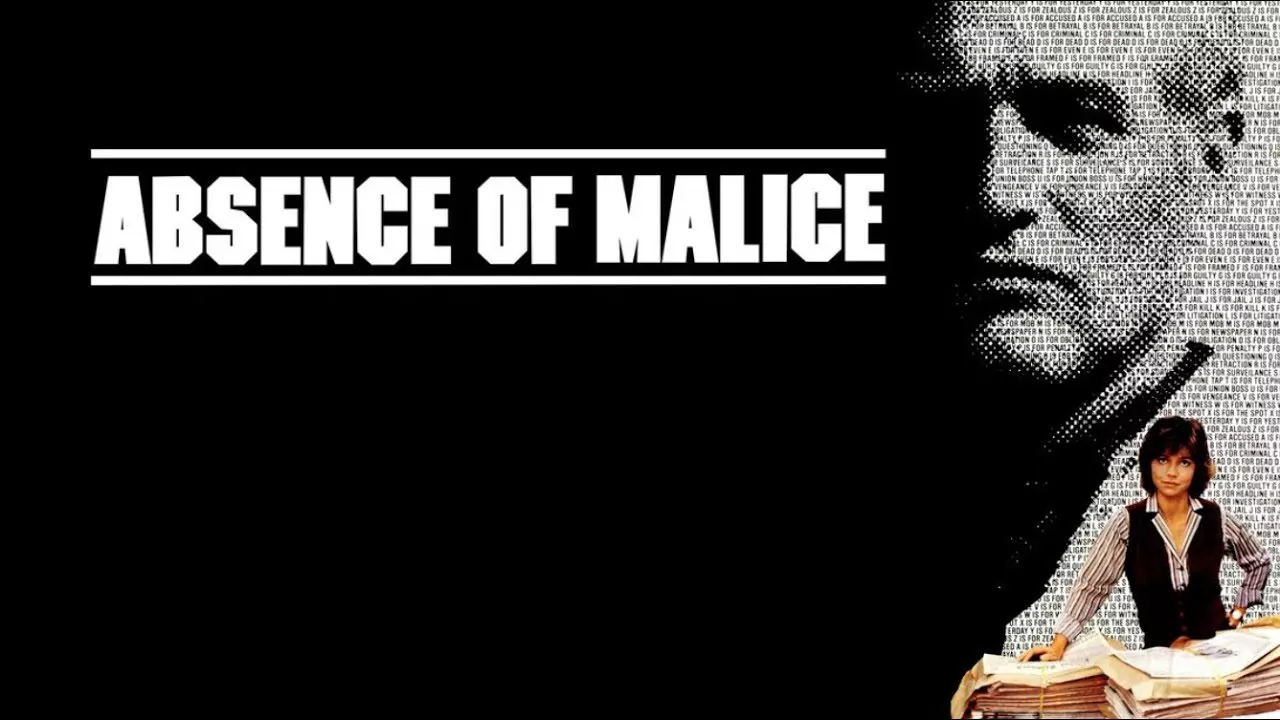
Absence of Malice (released in theaters on Dec. 18, 1981) remains a hauntingly relevant exploration of the power of the press and the devastating consequences of “truth” without context. Directed by Sydney Pollack, the film is a taut legal and journalistic thriller that sidesteps the usual hero-reporter tropes to ask a difficult question: Is it enough for a story to be accurate if it isn’t true?
Michael Gallagher (Paul Newman) is a hardworking wholesale liquor dealer and the son of a long-dead mobster.
Despite his honest life, he becomes the target of a federal investigation led by Elliot Rosen (Bob Balaban), a cold, calculating federal prosecutor who is frustrated by his inability to solve the disappearance of a local labor leader.
In a deliberate attempt to squeeze Gallagher for information he doesn’t have, Rosen leaks a fake story suggesting Gallagher is a prime suspect.
The leak is picked up by Megan Carter (Sally Field), an ambitious reporter for a major Miami newspaper.
Adhering to the legal standard of “absence of malice,” Megan publishes the story because the investigation is technically a matter of public record, even though she knows it could destroy Gallagher’s reputation.
As Gallagher’s world collapses—his business is boycotted and his privacy is shattered—he tries to explain his innocence to Megan.
The situation turns tragic when Gallagher’s fragile friend, Teresa Peron (Melinda Dillon), provides Megan with an alibi for Michael that involves a deeply personal secret.
When Megan publishes the detail, the fallout is fatal. Realizing he is being used as a pawn by both the government and the media, Gallagher orchestrates a brilliant, complex sting to expose the corruption of the investigators and the recklessness of the press.
The film reaches its peak when an Assistant Attorney General (Wilford Brimley) arrives to untangle the ethical mess in a legendary, scene-stealing interrogation.
Josef Sommer and John Harkins round out the cast.
The film earned three Academy Award nominations, including nods for Newman’s understated, powerful performance and Dillon’s heartbreaking supporting turn.
Brimley’s brief but iconic appearance remains one of the most celebrated examples of a “one-scene wonder” in cinema history.

Sally Field in Absence of Malice (Photo/Columbia Pictures)
Reception for Absence of Malice
Absence of Malice grossed $2.4 million on its opening weekend, finishing third at the box office behind Neighbors ($6.5 million) and Sharky’s Machine ($3 million).
The film would improve to No. 1 two weeks later and remain in the top 10 for 12 of its first 13 weeks en route to grossing $40.7 million in its theatrical run.
Roger Ebert gave Absence of Malice three out of four stars in his review.
Legacy
The legacy of Absence of Malice is its enduring role as a teaching tool for journalism and law schools across the country. Unlike All the President’s Men, which glorified investigative reporting, this film serves as a cautionary tale about the damage caused by “leaks” and the lack of accountability in the 24-hour news cycle.
It is remembered for its refusal to give its characters a traditional romantic ending, opting instead for a bittersweet conclusion that respects the gravity of the harm done.
The movie is viewed as a prescient critique of trial-by-media, standing as a sophisticated masterpiece that continues to challenge audiences to consider the human cost of the headlines they consume.