


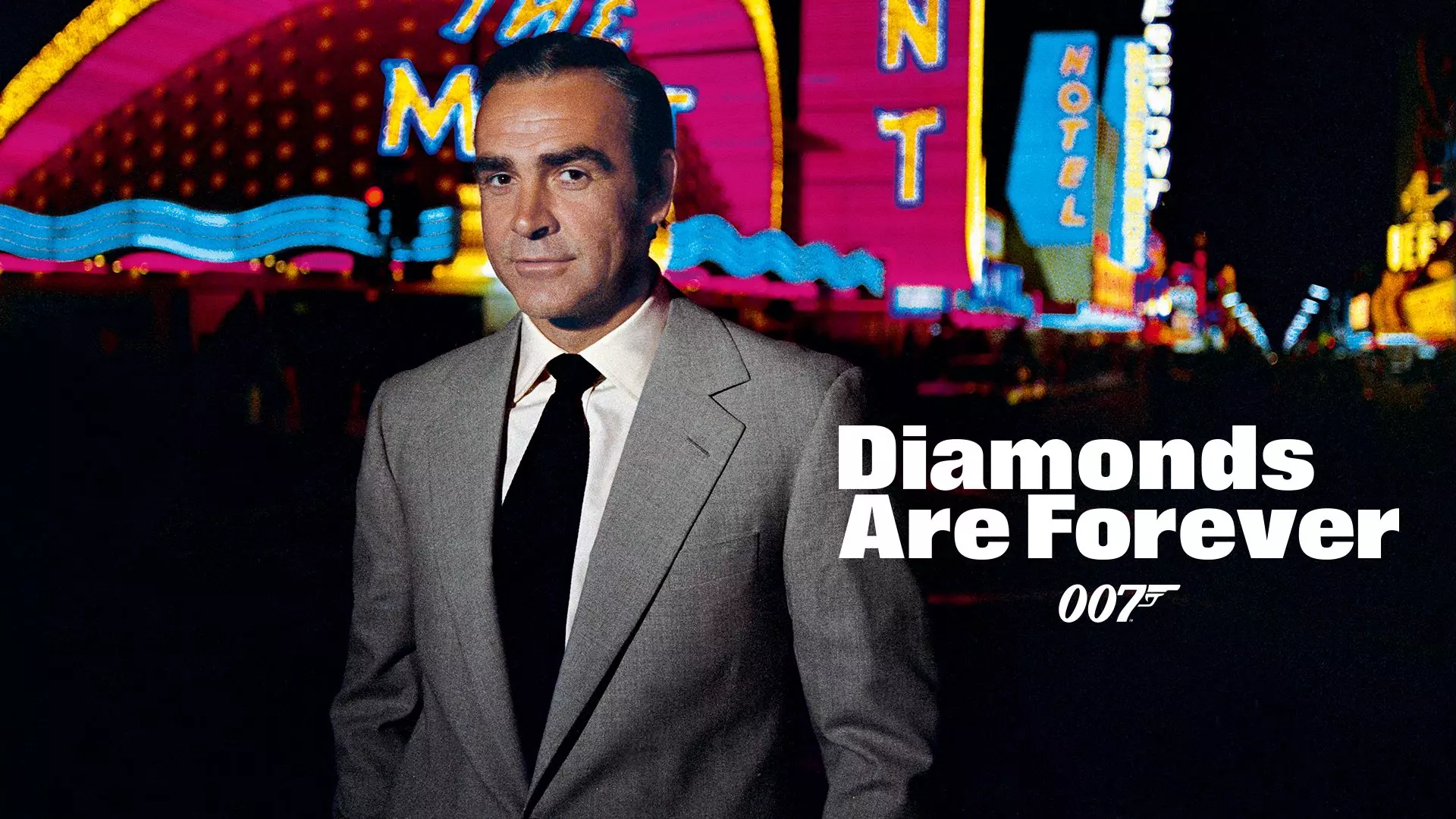
Diamonds Are Forever, released in theaters on Dec. 17, 1971, is a pivotal entry in the 007 franchise, marking the definitive shift from the gritty spy thrillers of the 1960s to the more extravagant, “campy” tone that would define the 1970s. Following the departure of George Lazenby (who appeared in 1969’s On Her Majesty’s Secret Service), Sean Connery makes a triumphant, high-priced return to the role that defined his career for his sixth and final Eon film.
The story begins with James Bond on a global vendetta, hunting down Ernst Stavro Blofeld (Charles Gray) to avenge the death of his wife. After seemingly disposing of his nemesis, Bond is assigned to investigate a massive diamond smuggling ring originating in South Africa.
The trail leads 007 to Amsterdam, where he assumes the identity of a professional smuggler to meet the savvy Tiffany Case (Jill St. John). The mission eventually moves to the neon-lit landscape of Las Vegas.
Along the way, Bond crosses paths with the ill-fated socialite Plenty O’Toole (Lana Wood) and uncovers a conspiracy involving the reclusive, Howard Hughes-esque billionaire Willard Whyte (Jimmy Dean).
Bond soon discovers that Blofeld is very much alive and using the stolen diamonds to power a sophisticated satellite laser.
This weapon of mass destruction is designed to destroy international nuclear stockpiles, allowing Blofeld to auction off global supremacy to the highest bidder.
Adding a layer of dark, surreal humor to the peril are the eccentric assassins Mr. Wint (Bruce Glover) and Mr. Kidd (Putter Smith), a pair who treat murder with the casualness of a domestic chore.
Bond receives his usual support from the MI6 stalwarts: M (Bernard Lee), Miss Moneypenny (Lois Maxwell), and the ever-reliable Q (Desmond Llewelyn), who provides the gadgets necessary to infiltrate Blofeld’s offshore oil rig command center for a final, explosive confrontation.
While Diamonds Are Forever eschewed the emotional depth of On Her Majesty’s Secret Service, it restored the series’ commercial dominance by embracing a more Americanized, humorous aesthetic.
The film was the second of four Bond films directed by Guy Hamilton.
Diamonds Are Forever was followed by Live and Let Die in 1973, with Roger Moore succeeding Connery as 007.
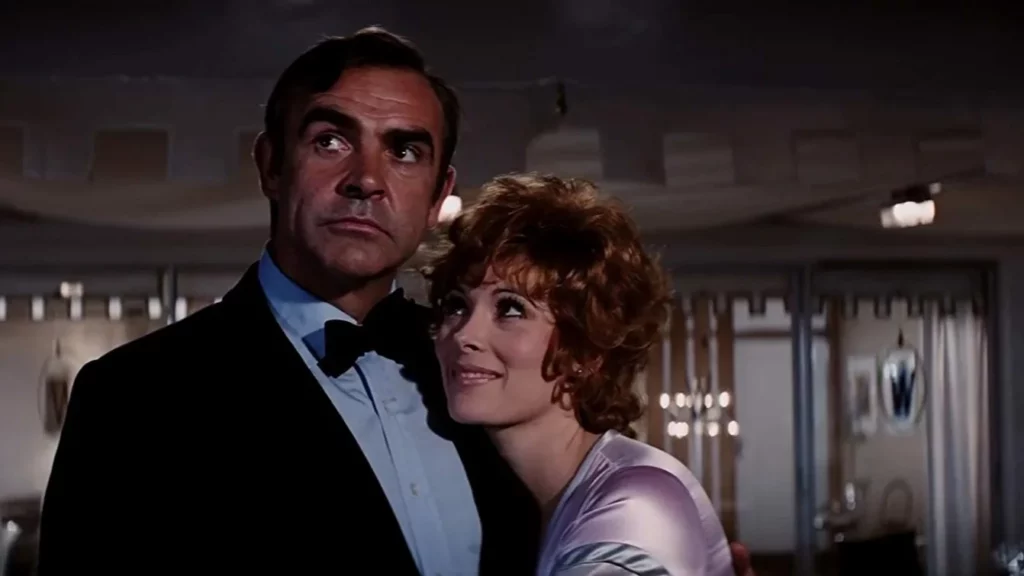
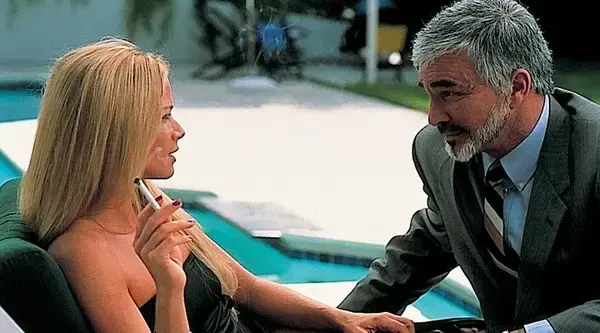
Sean Connery and Jill St. John in Diamonds Are Forever (Photo/United Artists)
Reception for Diamonds Are Forever
Diamonds Are Forever grossed $1.6 million on its opening weekend, finishing No. 1 at the box office.
The film would remain atop the box office for seven weeks en route to grossing $116 million worldwide.
Roger Ebert gave the film three out of four stars in his review.
Legacy
Diamonds Are Forever‘s legacy is inseparable from Connery’s effortless charisma, proving he still held the “Gold Standard” for the character. It is also remembered for featuring one of the franchise’s most iconic theme songs, performed by Shirley Bassey.
Though some critics find the plot leaning too far into self-parody—particularly with the inclusion of moon buggy chases and flamboyant villains—the film remains a quintessential “fun” Bond movie.
It successfully bridged the gap between eras, ensuring that James Bond would remain a culturally relevant icon for the decade to come.